The short answer: yes, it's safe — but here's the nuance
Municipal water in Fort Myers, Cape Coral, Naples, and the rest of Lee and Collier Counties is treated to meet all federal Safe Drinking Water Act standards and Florida Department of Environmental Protection rules. The utility disinfects it, filters it, and tests it constantly before it ever reaches your meter.
But 'meets the legal standard' is a floor, not a ceiling. The law allows trace levels of chlorine disinfectants, hardness minerals, and other compounds that are technically safe to consume yet still affect taste, smell, skin, and fixtures. Most homeowners we talk to want their water to be more than 'not illegal' — they want it to be genuinely good.
What's actually in your Southwest Florida tap water
Every municipal water report breaks down into a handful of categories. Here's what shows up consistently across Lee and Collier County utilities:
- 1
Chlorine & chloramines
Disinfectants the utility adds to keep water bacteria-free through miles of pipe. They're why tap water can taste and smell like a swimming pool.
- 2
Hardness minerals (calcium & magnesium)
Southwest Florida water is notoriously hard. These dissolved minerals leave white scale on showerheads, glass, and inside your water heater.
- 3
Total dissolved solids (TDS)
A catch-all for everything dissolved in the water — minerals, salts, and trace compounds that affect taste and leave residue.
- 4
Trace contaminants
Low levels of things like disinfection byproducts or, increasingly, PFAS ('forever chemicals') can be present even in water that passes every test.
Why 'safe' water can still be hard on your home
Hardness is the big one in Southwest Florida. The calcium and magnesium in city water don't pose a health risk — but they cost you money. Scale builds up inside water heaters and reduces their efficiency. It clogs showerheads, coats glass shower doors, leaves spots on dishes, and makes soap harder to rinse. Over years, it shortens the life of appliances and narrows your plumbing.
Chlorine, meanwhile, is doing exactly what it's supposed to — killing bacteria — but it also dries out skin and hair and gives drinking water that chemical taste that sends people to the bottled water aisle.
What you can actually do about it
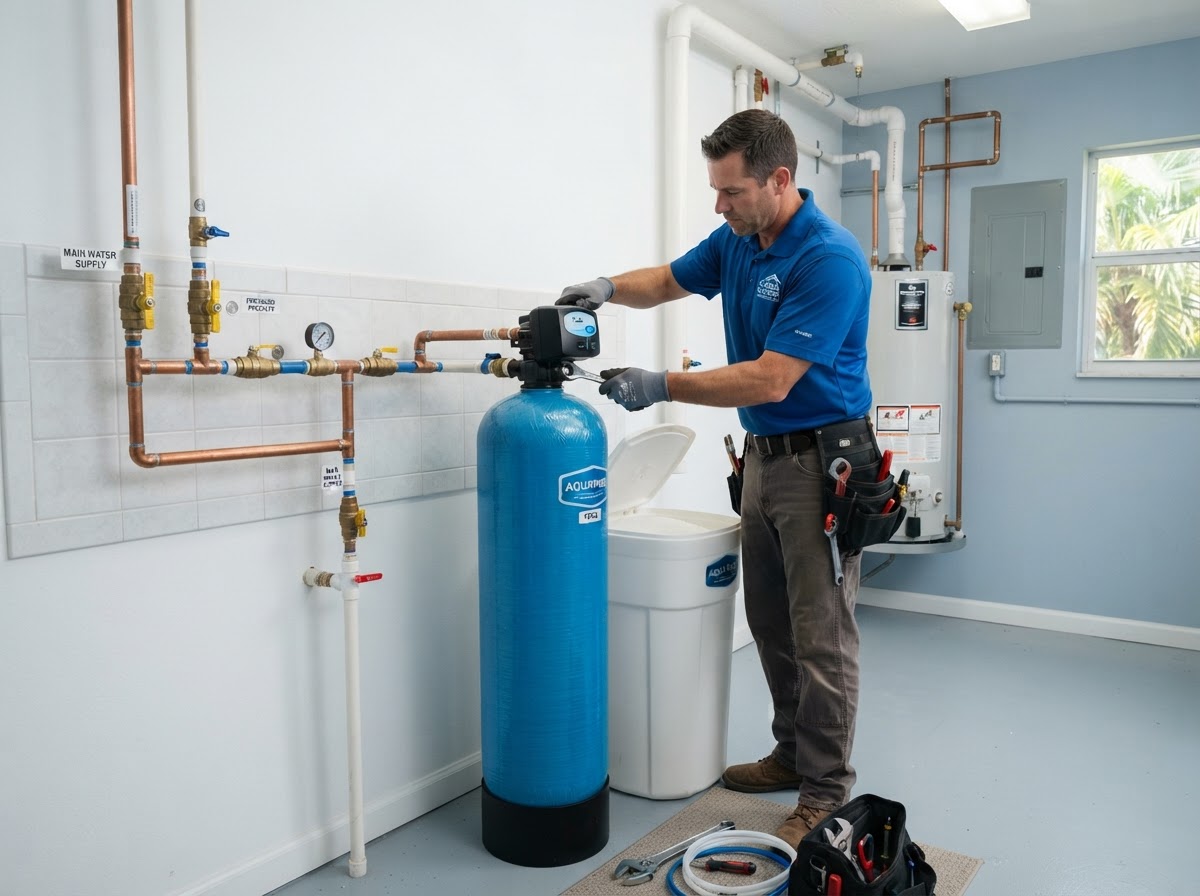
The good news: you don't have to choose between 'safe' and 'good.' A whole-home filtration and softening system takes water that's already safe and makes it genuinely pleasant — soft on your skin, clean-tasting at the tap, and free of the scale that wears down your home.
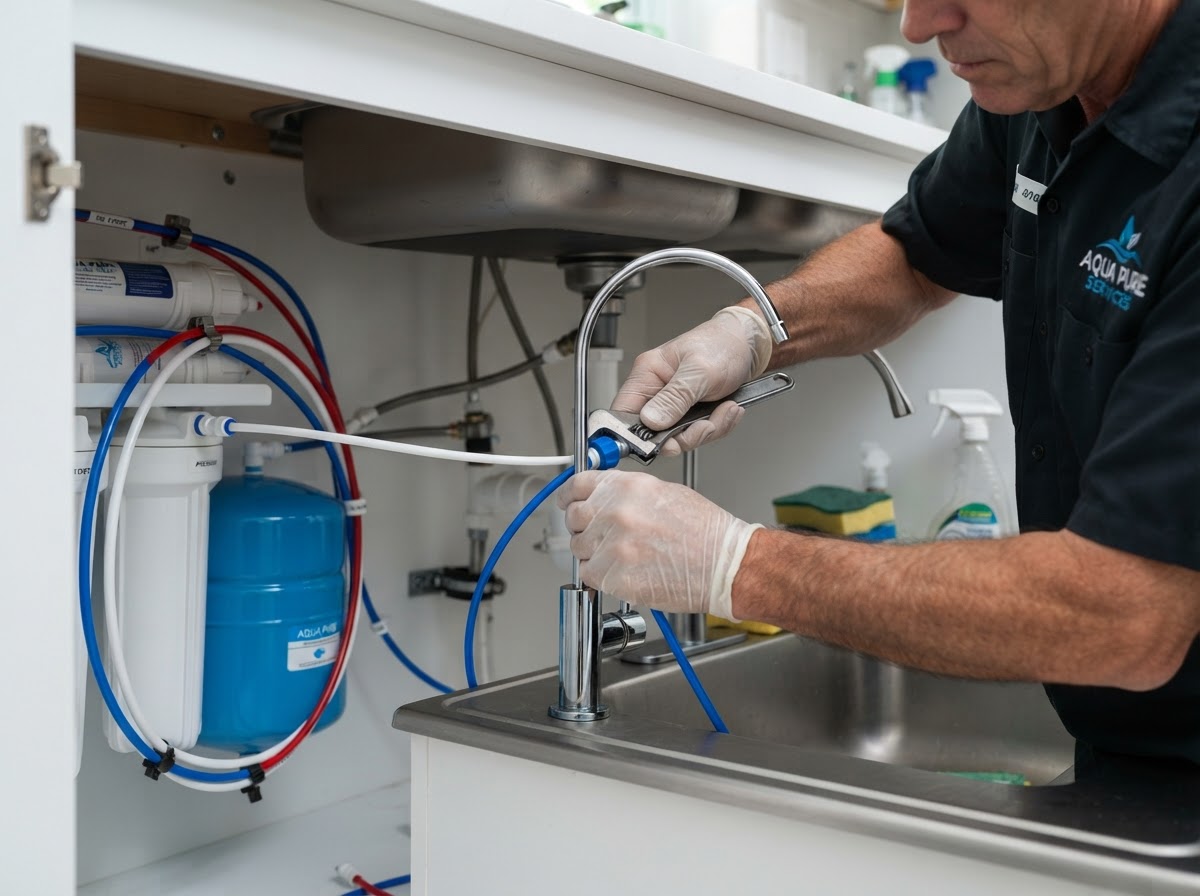
For drinking and cooking specifically, an under-sink reverse osmosis system removes up to 98% of dissolved solids, chlorine, and trace contaminants, giving you bottle-quality water straight from the kitchen — no bottles, no landfill, no recurring cost.
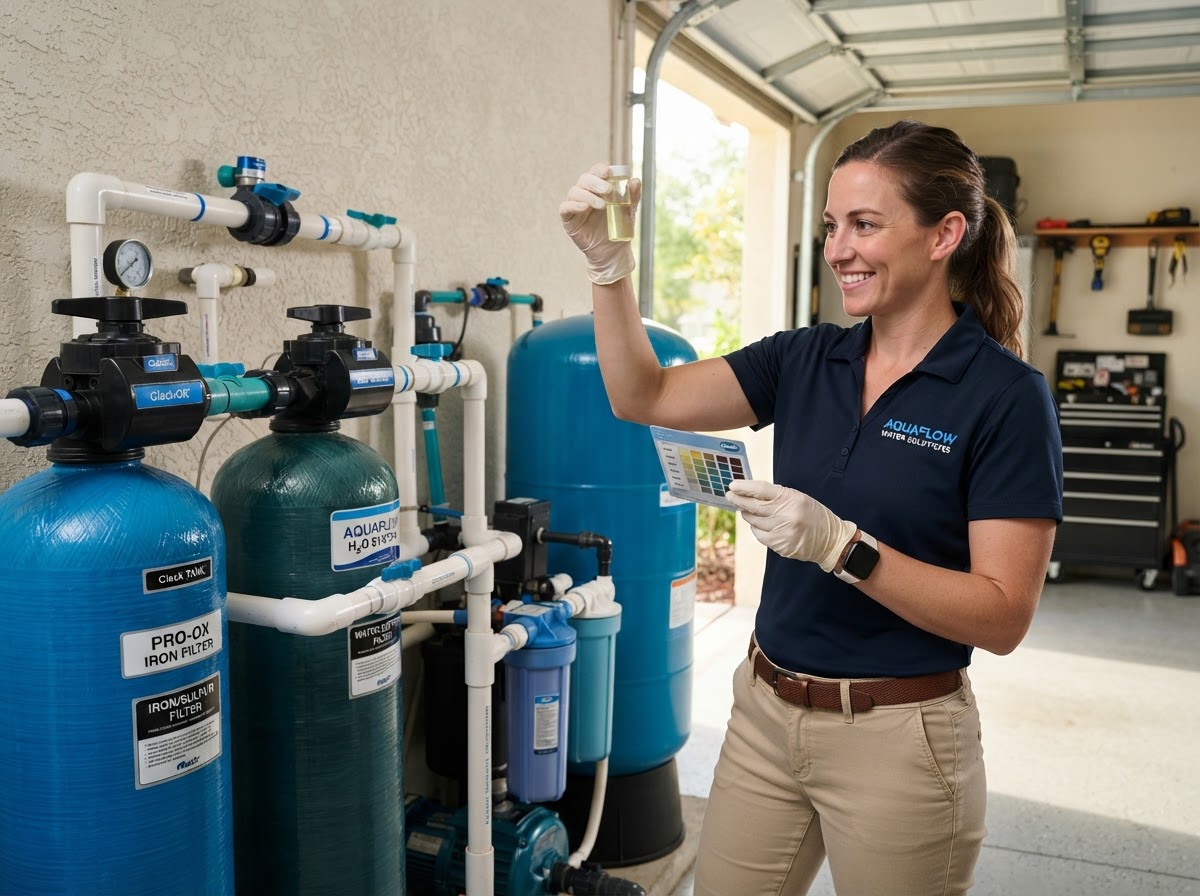
The right setup depends on your water source (city vs. well) and what you want to solve. That's exactly what we figure out on a free phone consultation — no in-home sales pitch required.
Have questions about your water?
Get a free phone quote — no in-home sales presentation required. We’ll explain your options in plain language.
Get My Free Phone Quote