What reverse osmosis actually does
Reverse osmosis (RO) is the most thorough water filtration you can put in a home. Where a carbon filter absorbs chlorine and odors, RO physically separates water molecules from nearly everything else dissolved in them — minerals, metals, chemicals, and microscopic contaminants.
The result is water that's cleaner than most bottled water, produced quietly under your sink for fractions of a cent per gallon.
How an under-sink RO system works
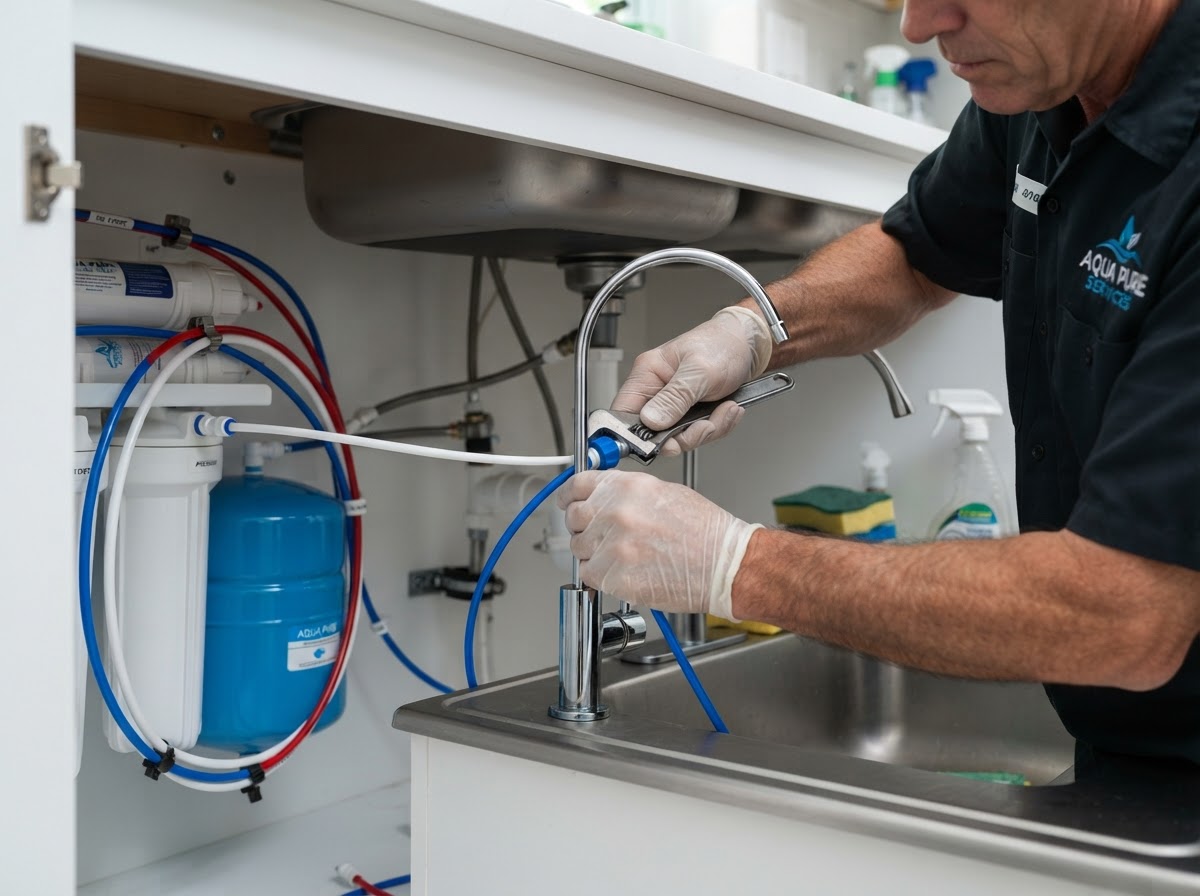
An under-sink RO system is a staged filtration unit. Water moves through several barriers in sequence, each handling a different job:
- 1
Stage 1 — Sediment pre-filter
Catches sand, silt, rust, and particulates so they don't clog the delicate membrane downstream.
- 2
Stages 2 & 3 — Carbon block filters
Absorb chlorine, chloramines, volatile organics, and bad tastes/odors before they can damage the membrane.
- 3
Stage 4 — The RO membrane
The core of the system. Water is forced under pressure through a semi-permeable membrane with pores so small that only water molecules pass. Up to 98% of dissolved solids, lead, fluoride, PFAS, and other contaminants are rejected to the drain.
- 4
Stage 5 — Pressurized storage tank
Holds a reserve of filtered water so it's ready instantly when you turn on the dedicated faucet.
- 5
Stage 6 — Polishing post-filter
A final carbon filter right before the faucet removes any last traces of taste or odor so the water is crystal-clean at the glass.
What RO removes that other filters can't
Carbon filters and pitcher filters are great for chlorine taste. But they don't touch dissolved solids, heavy metals, or emerging contaminants. RO does:
- 1
Up to 98% of total dissolved solids (TDS)
The catch-all measure of everything dissolved in your water.
- 2
Heavy metals
Lead, copper, arsenic, and others that can leach from older plumbing.
- 3
PFAS ('forever chemicals')
Increasingly detected in Florida water supplies and not removed by standard filters.
- 4
Fluoride & nitrates
Dissolved compounds that pass right through carbon alone.
Is an RO system worth it for your home?
If you buy bottled water, make coffee or tea, cook with tap water, or want clean ice — yes. An under-sink RO system pays for itself fast in bottles you no longer buy, and it eliminates the plastic waste that comes with them. Our under-sink RO is $500 installed, runs quietly under the cabinet, and connects to your fridge ice maker too.
The only maintenance is swapping filters on a schedule — sediment and carbon every 6–12 months, the membrane every 3–5 years. It's the lowest-maintenance, highest-payoff upgrade in the kitchen.
Have questions about your water?
Get a free phone quote — no in-home sales presentation required. We’ll explain your options in plain language.
Get My Free Phone Quote