What causes the rotten-egg smell
The smell is hydrogen sulfide gas — the same compound that makes hot springs and swamps stink. It's naturally produced by bacteria that live in oxygen-poor groundwater and feed on sulfur compounds in the aquifer.
In Southwest Florida's shallow private wells — common across Lehigh Acres, Buckingham, Golden Gate, and the rural stretches of Collier County — hydrogen sulfide is everywhere. The gas dissolves into the water underground and comes out at your tap.
Why the smell is worst in your hot water
If you've noticed the rotten-egg smell is strongest when you run a hot shower, you're not imagining it. Your water heater has a magnesium anode rod that protects the tank from corrosion — and that rod actually reacts with hydrogen sulfide in the water to produce even more of the gas.
So the smell you notice at the shower is a combination of sulfur already in your well water plus extra sulfur being generated inside the heater. Replacing the anode rod with an aluminum one can reduce the heater's contribution, but it doesn't fix the underlying well water problem.
What else comes with sulfur in well water
Hydrogen sulfide rarely shows up alone. The same shallow, mineral-rich aquifers that produce sulfur also tend to carry:
- 1
Iron
Dissolved iron oxidizes when it hits air, leaving orange/rust stains on driveways, toilets, sinks, and laundry.
- 2
Hardness
The same calcium and magnesium as city water, often at higher levels in wells.
- 3
Tannins
Organic compounds from vegetation that give well water a tea-like color, common in Alva, Buckingham, and Golden Gate Estates.
- 4
Sediment
Fine sand and silt that can clog fixtures and build up in plumbing.
How to get rid of sulfur for good
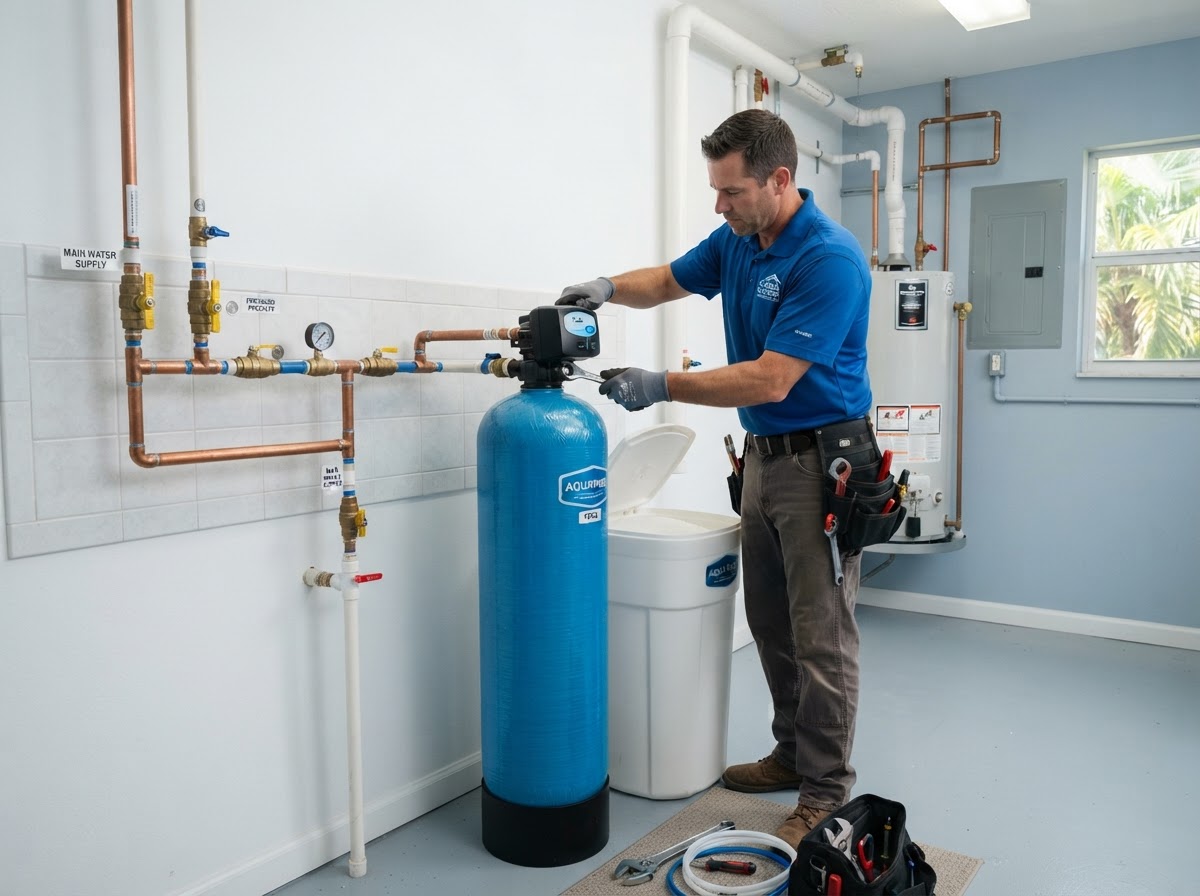
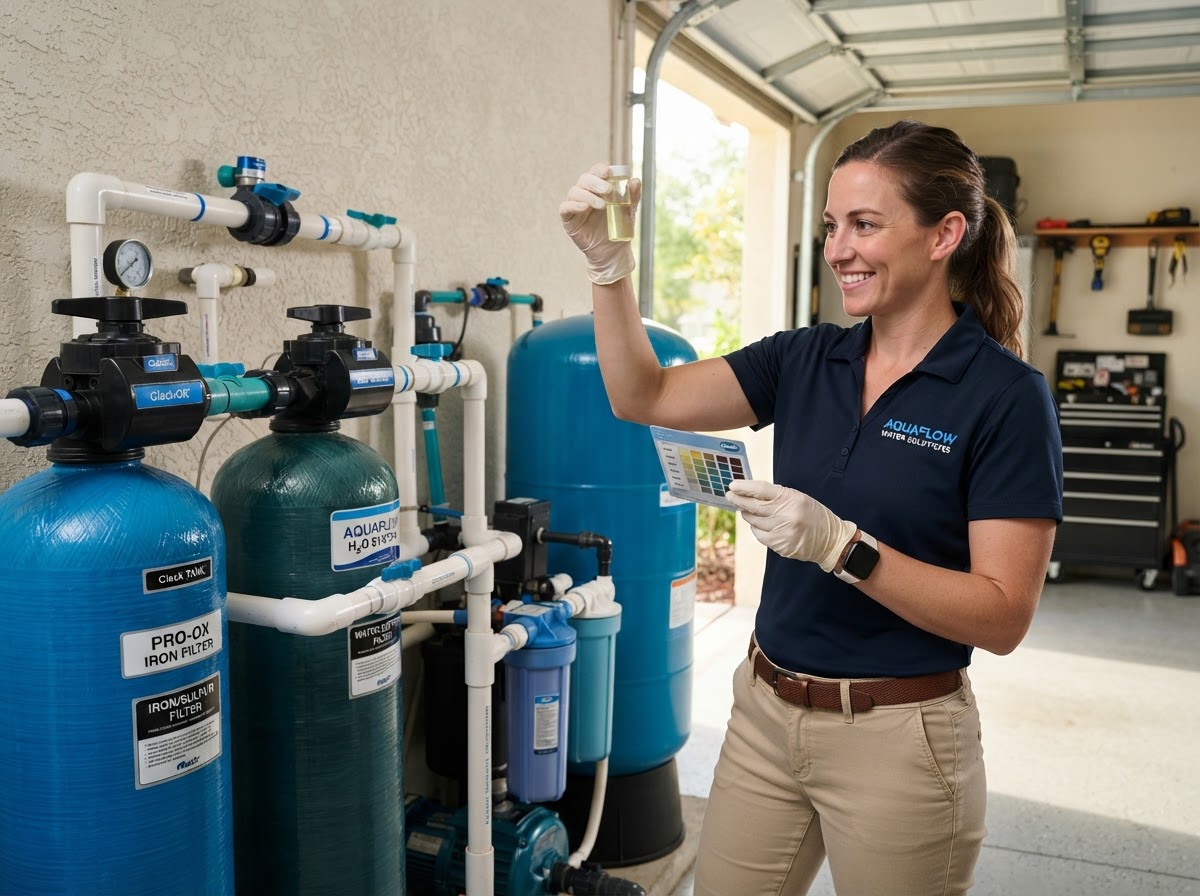
A single tank can't handle heavy sulfur and iron and softening at the same time — the iron and sulfur foul the softening resin and it stops working. That's why well systems use a staged, two-tank design:
Tank 1 oxidizes and filters out the iron and hydrogen sulfide gas, so the odor and staining are gone before the water reaches anything else. Tank 2 then softens the now-conditioned water, and a brine tank keeps that softening resin clean and regenerated.
The result: no rotten-egg smell at any tap, no orange stains on your driveway, and soft water throughout the house. For most Southwest Florida wells, this dual-tank well system — our $3,495 configuration — is the standard solution. We size it to your home's water use during a free phone consultation.
Have questions about your water?
Get a free phone quote — no in-home sales presentation required. We’ll explain your options in plain language.
Get My Free Phone Quote